


Replacing Sokalan PA25 — What Makes Alcosperse 602N Stand Out to Formulators?
- 2026-11-10
- 2026-11-09
- 2026-11-09
- 2026-11-06
Anyone who has painted a wall knows the feeling: fresh latex paint looks smooth, even, and uniform in color. But three to five months after moving in, some walls start showing subtle color shifts, uneven gloss, or even faint traces of "floating color." Most people blame the paint or the painter's technique. But few realize the root cause may lie in a component that accounts for less than 1% of the coating formula — the dispersant.
The "Invisible Coordinator" in Coatings
Coatings are mainly composed of latex, pigments and fillers, additives, and water. Pigments and fillers are solid particles that naturally tend to clump and agglomerate. The dispersant's job is to evenly "push apart" these particles, keeping them stably suspended in the system — no agglomeration, no sedimentation.
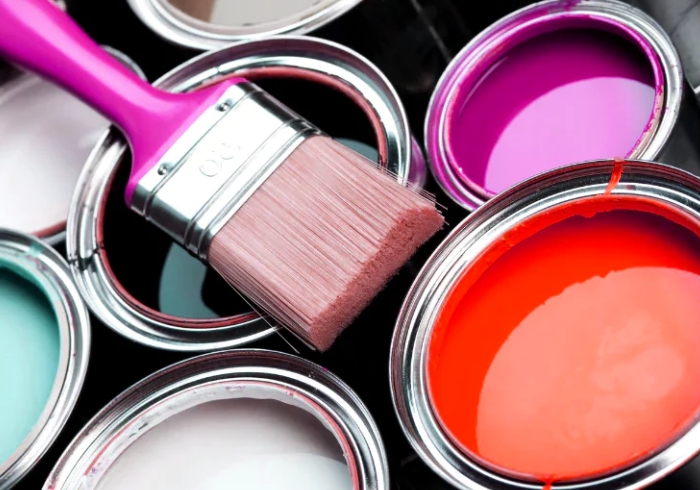
Alcosperse 602N is a waterborne sodium polyacrylate dispersant produced by Nouryon. Its narrow molecular weight distribution delivers a direct benefit: smoother air release during grinding, and relatively low dispersion viscosity even at high pigment loading. In other words, with the same sand mill and the same formula, it lets you grind more smoothly and with less effort.
Here's a real formulation scenario: in interior latex paints, titanium dioxide and ground calcium carbonate are often used at high levels, with pigments and fillers accounting for over 50% of the formula. If the dispersant isn't efficient enough, the slurry gets thicker as grinding proceeds, sand mill efficiency drops, energy consumption rises, and eventually it becomes impossible to grind. After switching to Alcosperse 602N, grinding viscosity drops noticeably and production efficiency improves accordingly.
Preventing "Regrinding" Is the Key to Long-Term Storage
What coating manufacturers fear most isn't being unable to produce — it's opening a can after two or three months and finding pigment regrinding, sedimentation, and caking.
A dispersant works in two stages: breaking apart particles during grinding, and preventing them from re-agglomerating during storage. Alcosperse 602N stabilizes particles and de-agglomerated particles that have already been ground and dispersed, preventing coagulation and providing long-term storage stability for the coating. One coating manufacturer reported that after switching to this product, finished paint showed significantly smaller changes in fineness and viscosity after four weeks of heat storage at 50°C, with more stable can-opening performance.
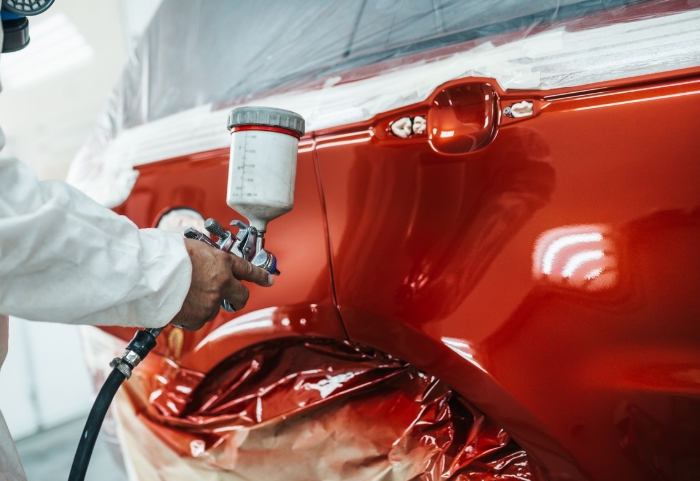
At the same time, it is inherently low-foaming — coatings generate very little foam during manufacturing and application. Foam leaves pinholes and shrinkage cavities on the film surface, compromising both appearance and protective performance. Low foaming means no additional defoamer is needed, making the formula simpler and the cost more controllable.
Versatility: The Reason Formulators Remember It
Alcosperse 602N delivers excellent dispersion for pigments and fillers such as titanium dioxide, ground calcium carbonate, and kaolin, and is suitable for a wide range of coating systems including pure acrylic, styrene-acrylic, vinyl-acrylic, and VAE. This versatility means formulators don't need to screen a separate dispersant for each system, reducing raw material variety and inventory pressure.
It can replace BASF's Sokalan PA25 and is particularly effective for ultrafine pigments and fillers. In anticorrosive coatings, it helps improve the dispersion of pigments and fillers, enhancing the coating's protective performance. In adhesives, inks, paper, textiles, and concrete, it delivers the same dispersion and stabilization benefits.
From waterborne coatings to adhesives, from inks to concrete, Alcosperse 602N solves the same problem: keeping solid particles evenly and stably suspended in waterborne systems — no agglomeration, no sedimentation, no regrinding.
Back to that wall from the beginning. Color shifts, floating color, uneven gloss — in many cases, it's not the paint's fault, nor the application's fault, but rather the wrong dispersant chosen for that less-than-1% component in the formula. The value of Alcosperse 602N lies precisely in making that 1% reliable.
Disclaimer: Some images or text references are sourced from public networks. If there is any infringement, please contact us for removal.